
This in-depth report on the US on war looks at the most recent developments linked to the escalating Israel Iran war, a phrase commonly used to describe the sharp rise in military tensions across the Middle East. It explains the background of the crisis, outlines reported air and maritime operations, and examines the strategic reasoning presented by U.S. officials. The article also reviews reactions from regional governments, growing security concerns in Gulf countries, and the wider economic consequences, including fluctuations in oil prices and pressure on global trade. Additionally, it considers how the situation may influence U.S. foreign policy decisions, the risks of further escalation, and what the ongoing Israel Iran war tensions could mean for global stability in 2026.
Why the United States Is at War
Growing friction between Washington and Tehran over nuclear activity, regional influence, and missile development has significantly increased tensions in recent years. While diplomatic negotiations have faced repeated setbacks, the situation has resulted in heightened military readiness and reported operational responses rather than a formally declared war. These developments represent a major moment in U.S. foreign policy in the Middle East.
U.S. officials state that any military actions are intended to deter threats against American forces and regional allies, as well as to maintain stability. At the same time, foreign policy experts caution that continued escalation in the US–Iran conflict could alter the balance of power across the region and create long-term geopolitical consequences.
Table of Contents
Latest Military Developments
Airstrikes and Strategic Targets
Recent US war updates indicate increased military coordination and reported precision strikes targeting missile infrastructure, air defense systems, and strategic facilities linked to Iran’s military network. According to defense briefings, the stated objective of these operations is to limit potential threats to U.S. forces and regional allies while deterring further missile or drone activity.
Naval Escalation in the Region
The U.S. Navy has strengthened its deployment in key maritime corridors, including areas critical to global energy transportation. While tensions at sea have intensified, there has been no officially confirmed report of a major Iranian warship being sunk by U.S. forces. However, expanded naval patrols and submarine positioning underscore how the United States–Iran war tensions are extending beyond air operations into strategically vital waterways.
Casualties and Ongoing Risks
U.S. defense officials have confirmed that heightened tensions in the region increase risks to American personnel and military assets stationed in the Middle East. While isolated incidents involving drones and missile activity have been reported in past regional escalations, there is no officially declared full-scale war between the two countries. However, continued military positioning and proxy-related tensions have raised security concerns among neighboring Gulf nations, prompting increased alert levels and defensive preparedness.
Regional and Global Impact
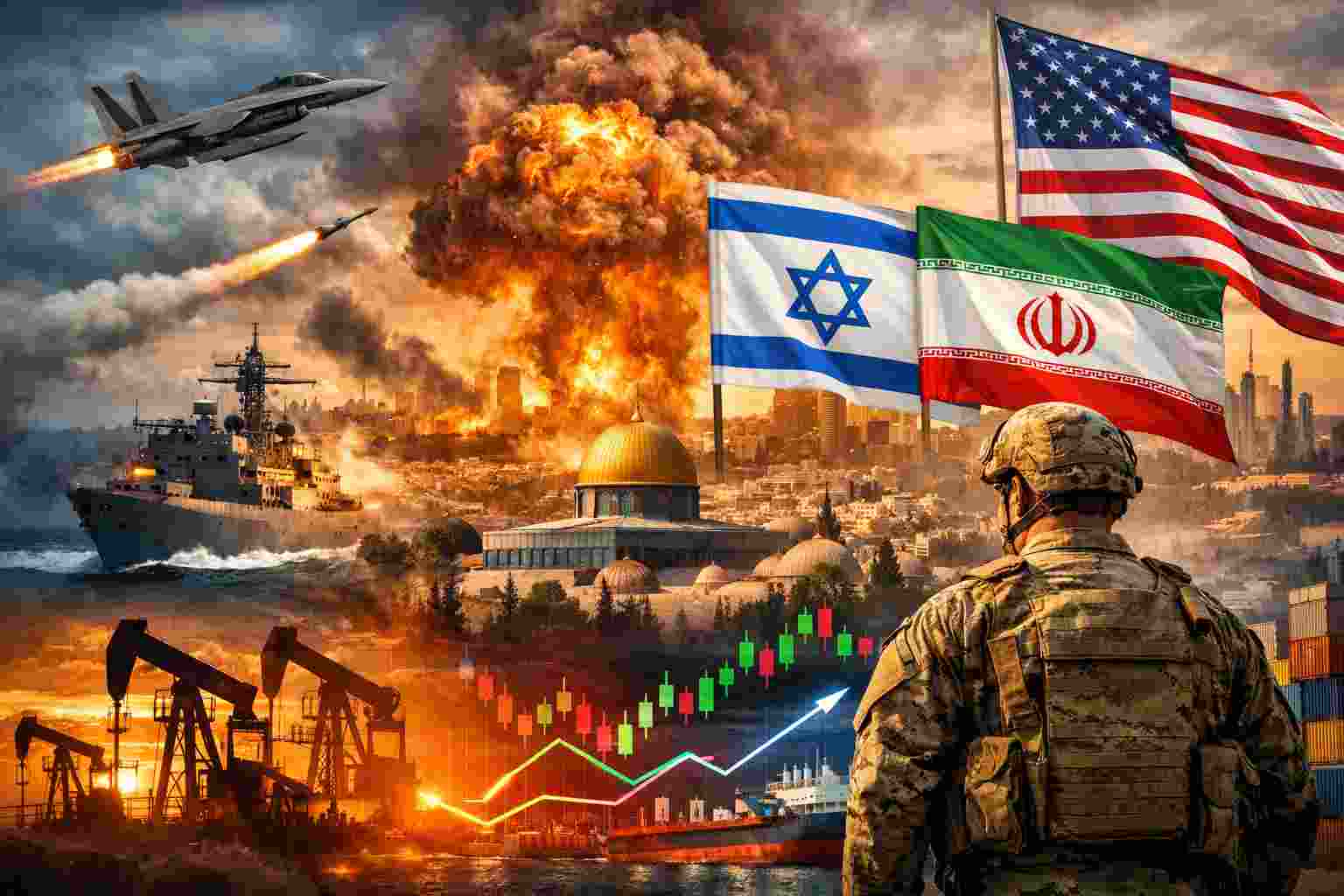
The escalation of military tensions involving the United States, Israel, and Iran has led to heightened alert levels across several Gulf states, including Bahrain and Saudi Arabia, as air defenses intercept missiles and drones and governments increase readiness.
The continuing military confrontation has also affected global energy markets. Oil prices have risen sharply amid concerns about disruptions to shipments through the Strait of Hormuz, a vital channel for roughly a fifth of the world’s oil supply, and broader supply chain risks tied to regional instability. Traders and analysts are watching for further market reactions as uncertainty persists.
Global responses to the conflict have been mixed. Nations such as Russia and China have called for restraint and warned against further escalation, as rising tensions have the potential to disrupt international trade and energy supplies if the situation continues to deteriorate.
Economic Consequences of the Conflict
The escalation of military tensions involving the United States, Israel, and Iran has already contributed to volatility in oil markets, with crude prices rising as traders factor in the risk of supply disruptions, particularly through the Strait of Hormuz, a key global energy route. Higher oil prices and geopolitical uncertainty are affecting global trade and investor sentiment, and could add to inflationary pressures if the situation persists. Analysts also note that prolonged instability may influence U.S. defense spending and long-term foreign policy planning, as governments reassess budgets and priorities in light of continued geopolitical risk. If tensions remain elevated throughout 2026, economic effects could extend beyond energy markets into broader financial and trade dynamics.
What Happens Next?
U.S. officials have indicated that military operations and defensive measures will continue in line with stated strategic objectives, while diplomatic communication channels remain formally open. Policy experts warn that if tensions intensify further, the broader United States war in the Middle East narrative could evolve into a larger regional crisis involving additional actors.
For now, global leaders and markets are closely watching the latest US war news, as ongoing developments continue to influence international politics, regional security calculations, and economic stability worldwide.
Summary
This article examines the current US on war developments and analyzes how the ongoing Israel Iran war tensions are evolving in 2026. It outlines the gradual buildup of geopolitical pressure that resulted in heightened military activity, including reported air operations, expanded naval deployments, and strategic defense positioning. The piece also explores the roles of the United States and Israel, rising security concerns across the Middle East, and the broader geopolitical implications. In addition, it reviews the economic effects of the conflict, including volatility in oil markets and increased global financial uncertainty. The article concludes by assessing possible next steps — whether the situation shifts toward further escalation or renewed diplomatic engagement.
🔔 Connect With Us
Stay updated with the latest Update,
👉 Join us on WhatsApp – Link
👉 Join our Telegram Channel – Link
👉 Follow us on X (Twitter) – Link
👉 Follow us on Instagram – Link
👉 Like our Facebook Page – Link
👉 Follow us on Threads – Link
Frequently Asked Questions (FAQS)
1. Is World War 3 coming?
There is no official World War 3 right now. However, rising tensions from the US on war and the Israel Iran war have increased global concerns about wider conflict.
2. Has Russia declared war on the US?
No, Russia has not declared war on the United States. While tensions exist, there is no formal war between the two countries.
3. What countries are involved in the Iran war?
The main countries involved are the United States, Israel, and Iran. Some regional groups and Gulf nations are also affected by the conflict.
4. Did China declare war on the US?
No, China has not declared war on the United States. China has called for restraint but is not directly involved in combat.
5. Who won the Civil War?
In the American Civil War (1861–1865), the Union (Northern states) defeated the Confederacy, keeping the United States unified.