
Meta Platforms is tracking employee screens and keystrokes to train AI tools. Learn how it works, privacy risks, and workplace impact in 2026.
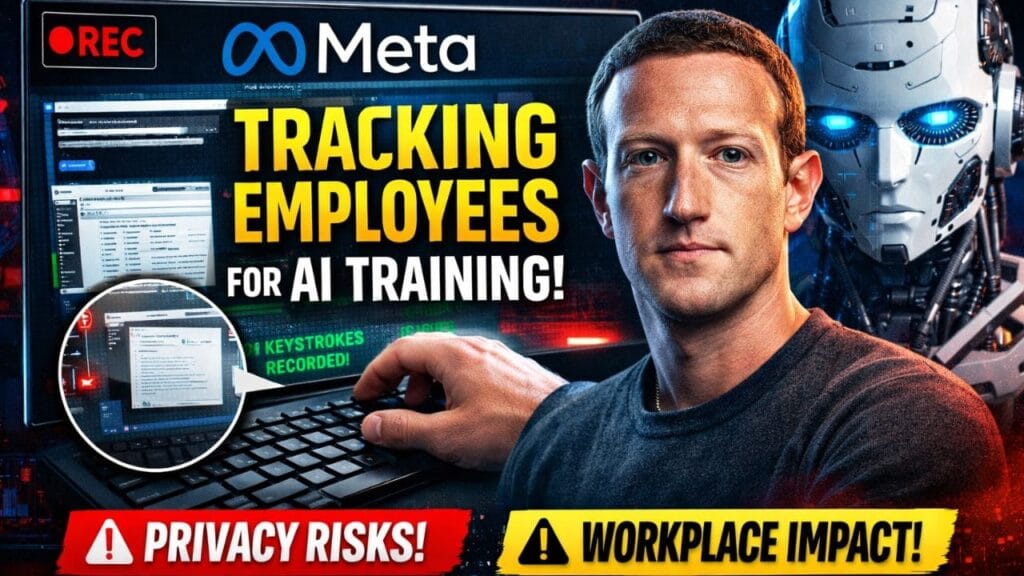
Meta Platforms is reportedly introducing new monitoring software on work devices used by employees in the United States. The system is designed to record on-screen activity such as mouse movements, clicks, typing patterns, and selected screenshots—data that will be used to train the company’s artificial intelligence models, according to Reuters.
How the Tracking System Works
The tool was outlined in an internal memo shared within Meta’s Superintelligence Labs division. It will function only across a limited set of approved workplace applications and websites.
Table of Contents
Instead of relying solely on pre-existing datasets, Meta aims to gather real user behavior. Employees are not required to take extra steps—the system passively collects interaction data as they go about their regular work tasks.
This includes everyday actions like:
- Moving a cursor across the screen
- Clicking buttons and links
- Using keyboard shortcuts
- Navigating menus and software interfaces
Why Meta Is Collecting Employee Activity Data
The primary objective behind this initiative is to improve AI systems so they can better understand and perform common computer-based tasks.
Meta is working toward building intelligent AI agents that can handle routine office work independently. However, one major limitation of current AI models is the lack of real-world examples showing how humans actually use computers.
By collecting this interaction data, Meta hopes to bridge that gap and create more capable, human-like AI tools—especially as it competes with companies like OpenAI and Anthropic.
A company spokesperson noted that understanding real user behavior—such as clicking patterns and navigation habits—is essential for improving AI performance.
Privacy Concerns and Company Safeguards
The rollout of such monitoring technology has sparked discussions around employee privacy and digital surveillance.
Meta has stated that:
- Sensitive or confidential information will be protected
- Data collection will be limited to specific tools and environments
- The information gathered will only be used for AI training purposes
Despite these assurances, concerns remain about how workplace monitoring may evolve and what it means for employee trust.
A Broader Industry Trend
Meta is not alone in seeking better training data. The AI industry is increasingly turning toward real-world work data to enhance model accuracy.
For example, OpenAI has previously explored collecting anonymized work samples like documents and spreadsheets through third-party partners.
Meta has also made major investments to strengthen its AI capabilities:
- Purchased a significant stake in Scale AI
- Appointed Alexandr Wang to lead its AI-focused division
- CEO Mark Zuckerberg has committed massive funding toward AI development through 2026
Workforce Changes Alongside AI Expansion
Alongside its aggressive AI push, Meta is also expected to reduce its workforce significantly, with reports suggesting potential layoffs affecting up to 20% of employees.
This reflects a larger shift across the tech industry, where companies are reallocating resources toward automation and AI-driven systems.
Final Thoughts
Meta’s move to track employee interactions marks a significant step in the evolution of AI training. While it could lead to smarter and more efficient AI tools, it also raises important questions about privacy, ethics, and the balance between innovation and employee rights.
🔔 Connect With Us
Stay updated with the latest Update,
👉 Join us on WhatsApp – Link
👉 Join our Telegram Channel – Link
👉 Follow us on X (Twitter) – Link
👉 Follow us on Instagram – Link
👉 Like our Facebook Page – Link
👉 Follow us on Threads – Link
Or email us at support@easylearnguide.com to get your copy.
📩 Contact & Business Inquiries
Have questions, collaborations, or business opportunities?
Feel free to reach out: contact@easylearnguide.com
Frequently Asked Questions (FAQs)
1. What is AI training data and why is it important?
AI training data is the information used to teach artificial intelligence models how to perform tasks. It includes text, images, user interactions, and more. High-quality training data helps AI systems make accurate predictions, understand human behavior, and improve performance over time.
2. How do companies train AI models using real human behavior?
Companies like Meta Platforms collect real-world data such as clicks, typing patterns, and screen interactions. This helps AI models learn how people actually use computers, making them more effective at performing real-life tasks like navigation, automation, and decision-making.
3. What are AI training jobs and how can you get one?
AI training jobs involve tasks like data annotation, labeling images, reviewing AI outputs, and improving model accuracy. Many companies, including Google and OpenAI, offer remote opportunities. To get started, you can take free AI training courses, learn basic data labeling skills, and apply on freelance or job platforms.
4. What is data annotation in AI training?
Data annotation is the process of labeling data so AI models can understand it. For example, tagging objects in images or marking correct answers in text. This step is essential because AI systems rely on labeled data to learn patterns and make accurate decisions.
5. Can AI replace human jobs or create new opportunities?
AI is changing the job market by automating repetitive tasks, but it is also creating new roles in areas like AI training, data analysis, and model supervision. Instead of fully replacing humans, AI is more likely to augment jobs, making human skills more valuable in creative and decision-based tasks.
You May Also Like –
Top 10 Smartest AI Models of 2026 (Ranked & Reviewed)
How to Use Google Chrome’s New AI-Powered Skills (Step-by-Step Guide)
AI Could Impact Over 50% of U.S. Jobs, New Analysis Reveals
Meta Launches First AI Model from Its High-Cost Superintelligence Team