
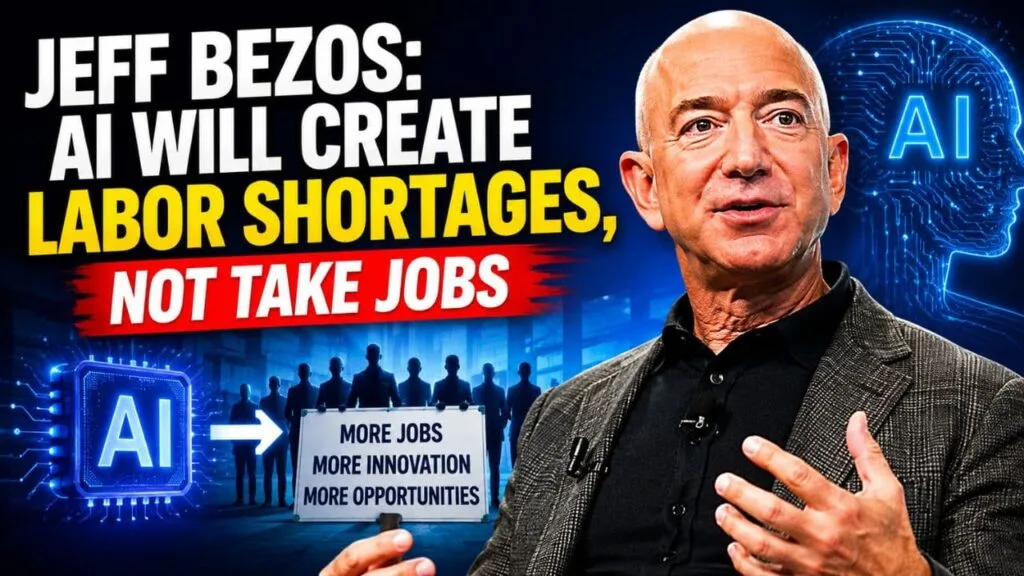
Amazon founder Jeff Bezos predicts AI will create more jobs than it eliminates, fueling innovation, entrepreneurship, and future workforce demand.
As artificial intelligence becomes more powerful and widely adopted, many people worry that machines could eventually replace large numbers of workers. However, Amazon founder Jeff Bezos believes the opposite may happen. According to Bezos, AI is more likely to increase demand for human talent than eliminate it.
Speaking at the VivaTech technology conference in Paris, Bezos shared an optimistic vision of how artificial intelligence could reshape the future economy. He argued that AI will help people turn ideas into reality faster, leading to greater innovation, new businesses, and increased demand for workers.
Bezos Rejects the Idea That AI Will Make Humans Obsolete
Bezos pushed back against concerns that AI will eventually replace human workers on a large scale. He believes people underestimate how many new opportunities can emerge when technology removes barriers to creation and problem-solving.
Table of Contents
In his view, the world is filled with untapped ideas for products, services, and businesses. The biggest challenge is not a lack of imagination but the difficulty of transforming concepts into real-world solutions. AI, he said, can help close that gap.
AI Could Speed Up the Journey From Idea to Reality
One of the key themes of Bezos’ remarks was the concept of a faster “dream-to-build” process. He explained that many people have creative ideas that never move beyond the planning stage because development takes too much time, money, or expertise.
Artificial intelligence can reduce those obstacles by helping with research, design, coding, content creation, and other complex tasks. As a result, more entrepreneurs and organizations may be able to launch projects that were previously impossible or impractical.
Get the latest AI news, technology updates, tutorials, and in-depth analysis delivered directly to your screen.
▶ Subscribe on YouTubeBezos believes that when innovation becomes easier, society will need more people—not fewer—to support and grow those new ventures.
Businesses Are Already Adjusting to the AI Era
While Bezos remains positive about AI’s long-term impact, companies across multiple industries are actively restructuring their workforces as they invest in artificial intelligence technologies.
Recent workforce reports show that many organizations have cited AI adoption as a factor behind workforce reductions. Technology companies, in particular, continue to balance cost-cutting measures with significant investments in AI tools, infrastructure, and research.
These developments have intensified the debate over how quickly AI will transform the labor market.
Experts Say the Workforce Is Entering a New Phase
Employment specialists note that AI is already changing how businesses operate. Automation can improve efficiency and productivity, allowing companies to accomplish more with fewer resources.
At the same time, history shows that major technological advances often create entirely new industries and career paths. Similar concerns emerged during the rise of computers, the internet, and digital communication tools, yet those innovations ultimately generated millions of jobs worldwide.
Many analysts believe AI could follow a similar pattern, replacing some tasks while creating new opportunities that do not yet exist.
Amazon Continues Expanding Its AI Investments
Amazon remains one of the largest companies investing in artificial intelligence. The company has integrated AI into various areas of its business while continuing to develop new technologies designed to improve efficiency and customer experiences.
Get the latest AI news, technology updates, tutorials, and in-depth analysis delivered directly to your screen.
▶ Subscribe on YouTubeAlthough workforce reductions have occurred across the technology sector, Bezos maintains that AI’s broader effect will be to expand human capabilities and increase economic activity.
The Long-Term Outlook for AI and Employment
Bezos argues that the future challenge may not be widespread unemployment but finding enough skilled people to support a growing number of innovations. As AI helps individuals and organizations move faster from concept to execution, demand for talent could rise across multiple industries.
While questions remain about the pace of change, Bezos believes artificial intelligence will ultimately empower people to create more, build more, and unlock opportunities that were previously out of reach.
🔔 Connect With Us
Stay updated with the latest Update,
👉 Join us on WhatsApp – Link
👉 Join our Telegram Channel – Link
👉 Follow us on X (Twitter) – Link
👉 Follow us on Instagram – Link
👉 Like our Facebook Page – Link
👉 Follow us on Threads – Link
📩 Contact & Support
Have questions, feedback, support requests, collaborations, or business opportunities?
Feel free to reach out:
📧 Business Inquiries: contact@easylearnguide.com
📧 Support & General Assistance: support@easylearnguide.com
Frequently Asked Questions (FAQs)
1. What did Jeff Bezos do before founding Amazon?
Before starting Amazon in 1994, Jeff Bezos worked in the finance and technology industries on Wall Street. He held positions at several companies, including Bankers Trust and D. E. Shaw & Co., where he became one of the firm’s youngest senior vice presidents. His experience in technology and business helped him recognize the internet’s enormous growth potential.
2. Why does Jeff Bezos believe AI will create more jobs?
Jeff Bezos believes artificial intelligence will help people turn ideas into real products and businesses faster. As innovation increases, companies will need more workers to develop, manage, and expand new opportunities, leading to greater demand for talent rather than fewer jobs.
3. What is Jeff Bezos’ prediction about AI and the workforce?
Jeff Bezos predicts that AI will create labor shortages instead of widespread unemployment. He argues that artificial intelligence will unlock new industries, products, and services, increasing the need for skilled workers across many sectors of the economy.
4. Will artificial intelligence replace human jobs?
While AI may automate certain tasks, many experts believe it will also create new career opportunities. Like previous technological advances, AI is expected to transform how people work while creating new industries and employment options.
5. When did Jeff Bezos start Amazon?
Jeff Bezos founded Amazon in 1994 after leaving his Wall Street career. The company began as an online bookstore and later expanded into e-commerce, cloud computing, artificial intelligence, digital entertainment, and other major industries.
6. What is the ‘dream-build loop’ mentioned by Jeff Bezos?
The dream-build loop refers to the process of turning ideas into real-world products and services. Bezos believes AI can accelerate this process by reducing development costs and complexity, allowing more innovations to reach the market.
7. How did Jeff Bezos become successful?
Jeff Bezos became successful by identifying the potential of the internet early and building Amazon into one of the world’s largest technology companies. His focus on innovation, customer satisfaction, and long-term thinking helped drive Amazon’s rapid growth and global success.
You May Also Like –
Tech Workers Are Cutting Back on AI After Reaching Peak Usage: Here’s Why
Jeff Bezos-Backed Prometheus Raises $12 Billion to Build an Artificial General Engineer
Scientists Created a Fake Disease to Test AI – Then Chatbots Claimed It Was Real
China Unveils $295 Billion AI Investment Plan to Power Nationwide Artificial Intelligence Expansion
AI Startup Probably Raises $9M to Build More Reliable Artificial Intelligence
House Unveils AI Draft Bill That Would Override State AI Laws