
U.S. lawmakers have unveiled a bipartisan AI bill that would establish federal oversight for advanced AI systems, require safety disclosures from developers, and create a nationwide framework for artificial intelligence regulation.
A bipartisan group of lawmakers in the U.S. House of Representatives has released a comprehensive proposal aimed at creating federal rules for artificial intelligence. The measure is being viewed as one of Congress’s most significant attempts to establish nationwide AI standards before attention shifts toward the upcoming midterm election cycle.
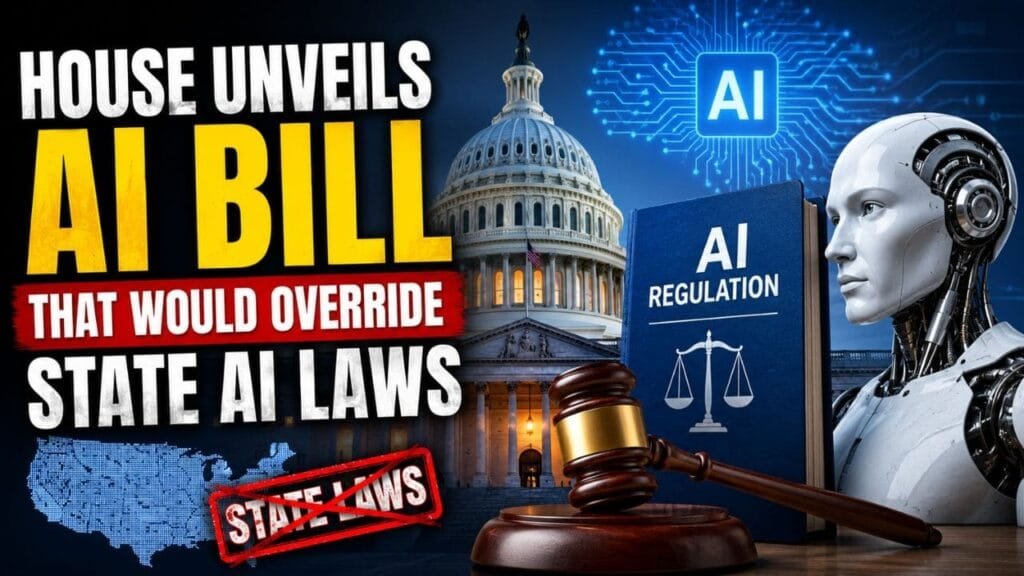
The proposal, introduced by Representatives Jay Obernolte and Lori Trahan, seeks to balance innovation with safety by creating a federal regulatory framework for advanced AI systems. Supporters say the legislation would provide clear and consistent rules for AI developers, while critics argue that it could reduce the ability of states to implement stronger protections.
Federal Oversight for Advanced AI Systems
The proposed legislation would require companies developing highly capable AI models to assess and address potential risks before releasing new systems. Developers would need to create formal safety and security plans that outline how they intend to manage concerns such as cybersecurity threats, misuse of AI technology, and other large-scale risks.
Table of Contents
In addition, independent auditors would be responsible for reviewing whether companies are complying with their safety commitments. The goal is to increase transparency and accountability as AI technologies become more powerful and widely adopted.
Proposal Sparks Debate Over State AI Laws
A major point of controversy within the framework involves the relationship between federal and state regulation.
The bill would establish a national regulatory approach that could limit certain state-level AI laws. Supporters argue that a single federal standard would prevent a patchwork of different regulations that could make compliance more difficult for businesses operating across the country.
🎁 Free AI Regulation Cheat Sheet 2026
Learn how new AI laws, federal regulations, cybersecurity risks, and Big Tech policies are shaping the future of artificial intelligence.
Need help? support@easylearnguide.com
However, opponents believe states should continue to play an active role in AI oversight. They argue that state governments have often acted more quickly than Washington in responding to emerging technology risks and should retain the flexibility to adopt stronger safeguards when necessary.
AI Safety Advocates Express Concerns
Several organizations focused on responsible AI development have voiced concerns about provisions that could restrict state authority.
Critics warn that replacing state initiatives with a single federal framework may weaken existing protections and reduce regulatory pressure on large technology companies. Many safety advocates support federal regulation but believe states should still have the ability to enact additional protections when new risks emerge.
Others have suggested that Congress should create a baseline national standard while allowing individual states to implement stricter requirements if they choose.
Expanding the Role of Federal AI Standards
The legislation would strengthen the role of the Center for AI Standards and Innovation (CAISI), which operates within the National Institute of Standards and Technology.
Under the proposal, the agency would receive additional resources and formal congressional authorization to oversee AI evaluations, develop safety guidelines, and help ensure compliance with federal requirements. The measure would also provide significant funding to support the agency’s work over the coming years.
Major AI developers already participate in various voluntary evaluation programs, and lawmakers hope a stronger federal framework will improve consistency and trust across the industry.
Focus on Cybersecurity and Open-Source Technology
Cybersecurity is another key element of the proposed legislation.
Federal agencies would work together to help secure open-source software projects and improve defenses against emerging cyber threats. Certain U.S.-based developers and organizations could gain access to advanced AI tools designed to identify vulnerabilities and strengthen digital infrastructure.
The framework also includes measures intended to improve collaboration between government agencies and critical infrastructure operators, helping them respond more effectively to increasingly sophisticated cyberattacks.
Political Challenges Remain
Although the proposal has bipartisan sponsorship, its path through Congress is far from certain.
Lawmakers from both parties remain divided on the question of federal preemption and the proper balance between innovation and regulation. Some policymakers support a unified national framework, while others believe states should retain broader authority over AI oversight.
The debate comes as artificial intelligence continues to play a larger role in the economy, national security, and everyday life, increasing pressure on lawmakers to develop clear rules for the technology.
What Comes Next?
The release of the discussion draft marks the beginning of what could be a lengthy legislative process. Lawmakers, industry leaders, researchers, and advocacy groups are expected to weigh in as Congress considers the proposal.
If eventually approved, the legislation could become one of the most influential AI laws in U.S. history, establishing nationwide standards for AI development, safety testing, cybersecurity protections, and regulatory oversight.
As the race to lead in artificial intelligence accelerates, the outcome of this debate may help determine how the United States governs one of the most transformative technologies of the modern era.
Get the latest AI news, technology updates, tutorials, and in-depth analysis delivered directly to your screen.
▶ Subscribe on YouTube🔔 Connect With Us
Stay updated with the latest Update,
👉 Join us on WhatsApp – Link
👉 Join our Telegram Channel – Link
👉 Follow us on X (Twitter) – Link
👉 Follow us on Instagram – Link
👉 Like our Facebook Page – Link
👉 Follow us on Threads – Link
📩 Contact & Business Inquiries
Have questions, collaborations, or business opportunities?
Feel free to reach out: contact@easylearnguide.com
Frequently Asked Questions (FAQs)
1. What is the new House AI bill?
The new House AI bill is a bipartisan proposal designed to establish federal regulations for advanced artificial intelligence systems. The legislation would require leading AI developers to assess potential risks, implement safety measures, and comply with oversight requirements aimed at improving transparency and accountability.
2. How would the proposed AI bill affect state AI laws?
The proposed legislation would create a federal framework for AI regulation that could override certain state-level AI laws. Supporters argue this would provide consistent nationwide standards, while critics believe states should retain the ability to adopt stronger AI protections when necessary.
3. Why is AI regulation becoming a major issue in the United States?
AI technology is advancing rapidly and is increasingly being used across industries, government agencies, and critical infrastructure. Policymakers are concerned about cybersecurity threats, misinformation, privacy risks, and the potential misuse of powerful AI systems, leading to growing calls for federal oversight.
4. What AI safety requirements would developers need to follow?
Under the proposed framework, major AI developers would be required to identify potential risks, create safety and security plans, and undergo independent audits. These measures are intended to reduce threats related to cybersecurity, misuse of AI models, and other high-impact risks.
5. How could the AI bill impact companies like OpenAI, Anthropic, and Google DeepMind?
Leading AI companies could face new federal compliance requirements, including safety assessments, risk management procedures, and external reviews. The goal is to ensure that advanced AI systems are developed responsibly while maintaining innovation and competitiveness.
6. What role would the federal government play in AI oversight?
The bill would strengthen federal oversight by expanding the responsibilities of the Center for AI Standards and Innovation (CAISI). The agency would help develop AI safety standards, monitor compliance, and support cybersecurity initiatives related to artificial intelligence.
7. Will the new AI legislation improve cybersecurity protections?
Yes. The proposal includes measures aimed at strengthening cybersecurity by supporting secure software development, improving information sharing on cyber threats, and helping organizations identify vulnerabilities using advanced AI tools. Lawmakers believe these provisions could help address emerging AI-related security risks.
You May Also Like –
Trump Signs AI Executive Order: Key Changes, Impact, and What It Means for America
Microsoft Study Reveals 40 Jobs at Highest Risk from AI — Full List Including Teachers
What Is Trusted Contact in ChatGPT? OpenAI’s New Security Feature Explained
How Big Tech Shaped Trump’s AI Executive Order Behind the Scenes
Meta Platforms to Monitor Employee Screens & Keystrokes for AI Training: Privacy Concerns Explained
How Sundar Pichai Turned Google into an AI Leader: Strategy Behind Winning the AI Race